Search
[give_form id="19690"]

Voices Of Incontinence Personal Story: I Pushed My Doctor For A Better Treatment

This story is a part of the National Association For Continence’s “Voices Of Incontinence” campaign, which shows, in patient’s own words, what it’s like to live with incontinence. Learn more about this campaign, watch the videos, read other stories, and find resources to manage bladder leaks here.

The Mary Story for Finding Relief from Urge Incontinence

I’ve been experiencing urge incontinence for about 3 years. I’m the poster child for an overactive bladder. The need to use the bathroom comes on frequently and urgently. And I have my own triggers. Washing the dishes? I suddenly have to go, and FAST! Walking in the door after coming home from work? I head straight to the bathroom.

At first I was able to make it, but it got to the point that my bladder just couldn’t hold it in any more. I started wearing absorbents “just in case” and began carrying around some extra clothes for the times when I had a real emergency.

This went on for several years and feeling, and eventually the pads just weren’t cutting it. So I finally worked up the courage to talk to my family doctor about what we could do to solve the issue. Right away, he suggested we try a medication to help ease the symptoms.

That lasted for about a month. My side effects were horrible. Constipation, a dry mouth. Sure, I didn’t leak as much, but it wasn’t just my bladder that was dry – I felt totally dehydrated all the time. It just wasn’t worth it for me to continue. So I stopped, went back to just using the pads, and waited until my next check up to talk about a Plan B.

At my follow up appointment, my doctor asked how they were going and I told him about what I experienced. “But were they working?” he asked? I told him, “Yes,” but that I couldn’t stand how they made me feel. He said I should have tried to stay on them for a bit longer to see if the effects would subside, and then suggested another medication for me to try.

I didn’t really want another medication. “Isn’t there anything else we could do?” I asked. He seemed bit exasperated and told me that he thought this med would be different. So I gave it a shot.

Unfortunately Finding Relief from Urge Incontinence, it had the same side effects as before. So I stopped taking it and started researching other options on my own.

That’s when I came across something called sacral neuromodulation. It sounded a little technical to me – it had something to do with stimulating a nerve that could help control bladder muscles – but I thought it seemed interesting. I immediately called my doctor to make an appointment to talk with him about it.

Turns out he didn’t know much. He said he didn’t perform that type of procedure at his office. I asked if he knew of anyone who did, and he finally said he could refer me to a urologist who might be able to help.

I saw the urologist a month later, and I can only say that I wish I had done it sooner. The urologist spent a good hour walking me through my medical history, talking about my concerns, and helping me to understand my incontinence issues. He then laid out my options (we took meds off the table immediately once he heard about my complaints) and finally settled on trying InterStim. That’s a form of the sacral neuromodulation I had researched earlier, and the way he explained it, it was kind of like a pacemaker that could control your bladder.

It was simple to put in (he did it right in his office) and there was a bit of a trial period, but I’ve now had it in for 6 months and it’s been working great so far. Very few leaks, and nothing I can’t control with a light pad.

I’m so thankful that I had the courage to push for something different. We need to remember that doctors are human, just like us, and they may not know about every treatment out there, or be comfortable recommending it on their own.

Contacting a specialist was the best thing I ever did for my incontinence.

Mary R.
Jacksonville, Fl

Comments

Leave a Reply

Your email address will not be published. Required fields are marked *

This site uses Akismet to reduce spam. Learn how your comment data is processed.

Related Articles

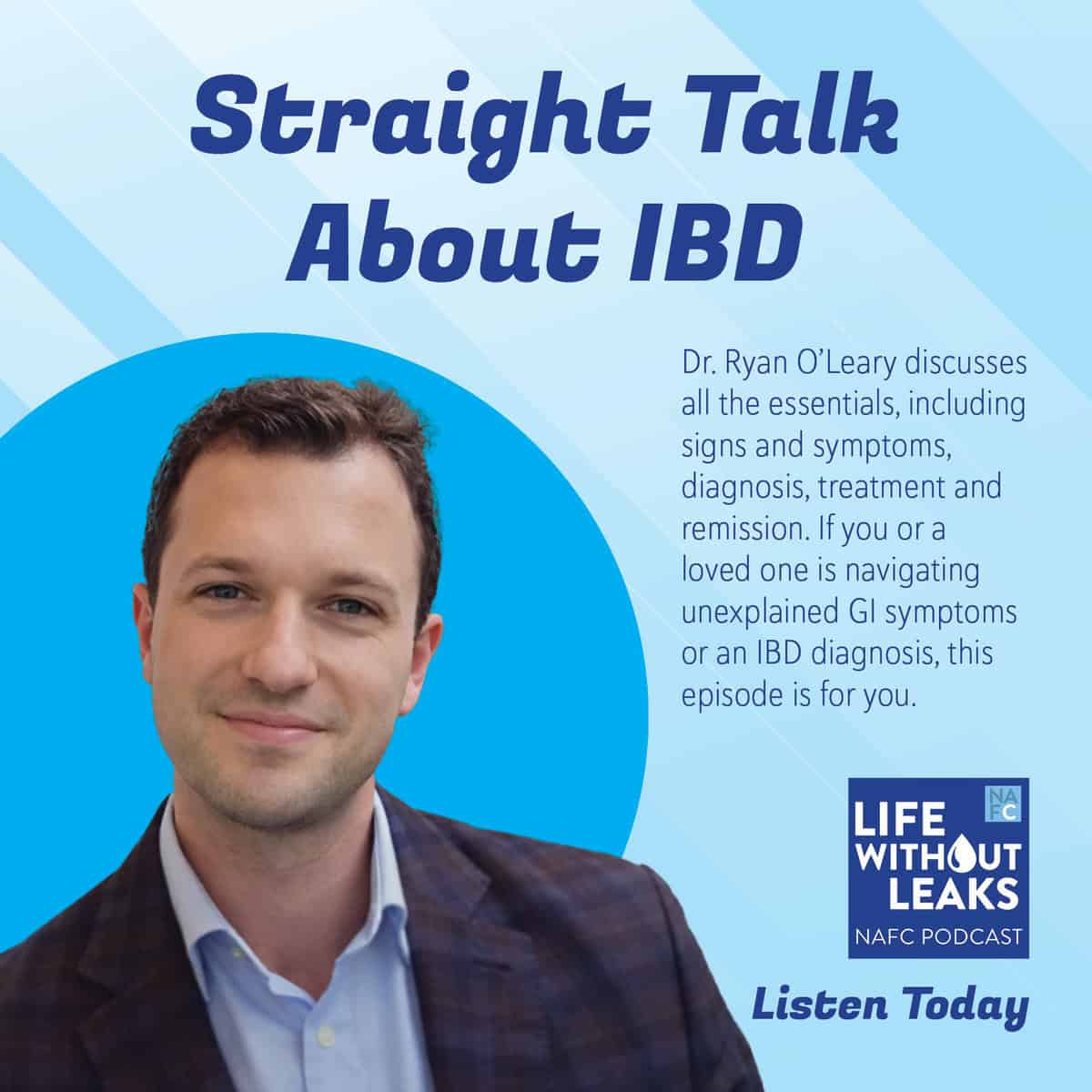
A man in a suit is shown next to text promoting a podcast episode called Straight Talk About IBD. The episode covers IBD symptoms, diagnosis, and treatment. The Life Without Leaks NAFC Podcast logo appears in the corner.

Understanding IBD: From Diagnosis to Remission… What You Need to Know – Copy

In this episode of Life Without Leaks, we’re joined by Dr. Ryan O’Leary, advanced fellow in inflammatory bowel disease, for a deep dive into inflammatory bowel disease (IBD).

Dr. O’Leary breaks down what sets Crohn’s disease and ulcerative colitis apart from other digestive conditions, explaining how IBD can affect patients at any age, from early childhood to later adulthood, and why diagnosis can sometimes be delayed. He explores the complexity of inflammation, the role of the immune system and how IBD can impact far more than the gut, including joints, skin, eyes and mental health.

The conversation also covers realistic treatment goals, the expanding range of medications available today, dietary considerations, when surgery becomes part of care and why personalized treatment plans are essential. Importantly, Dr. O’Leary addresses the emotional toll of living with a chronic condition and emphasizes the importance of persistence, advocacy and specialist care.

If you or a loved one is navigating unexplained GI symptoms or an IBD diagnosis, this episode offers clarity, reassurance and a hopeful look at what’s possible with modern care.

Learn more about a wide range of bowel conditions and get free resources here.

IBD Patient Story - Gerri.

From Pain ‘Like Lava’ to Remission: Living Fully with Crohn’s Disease

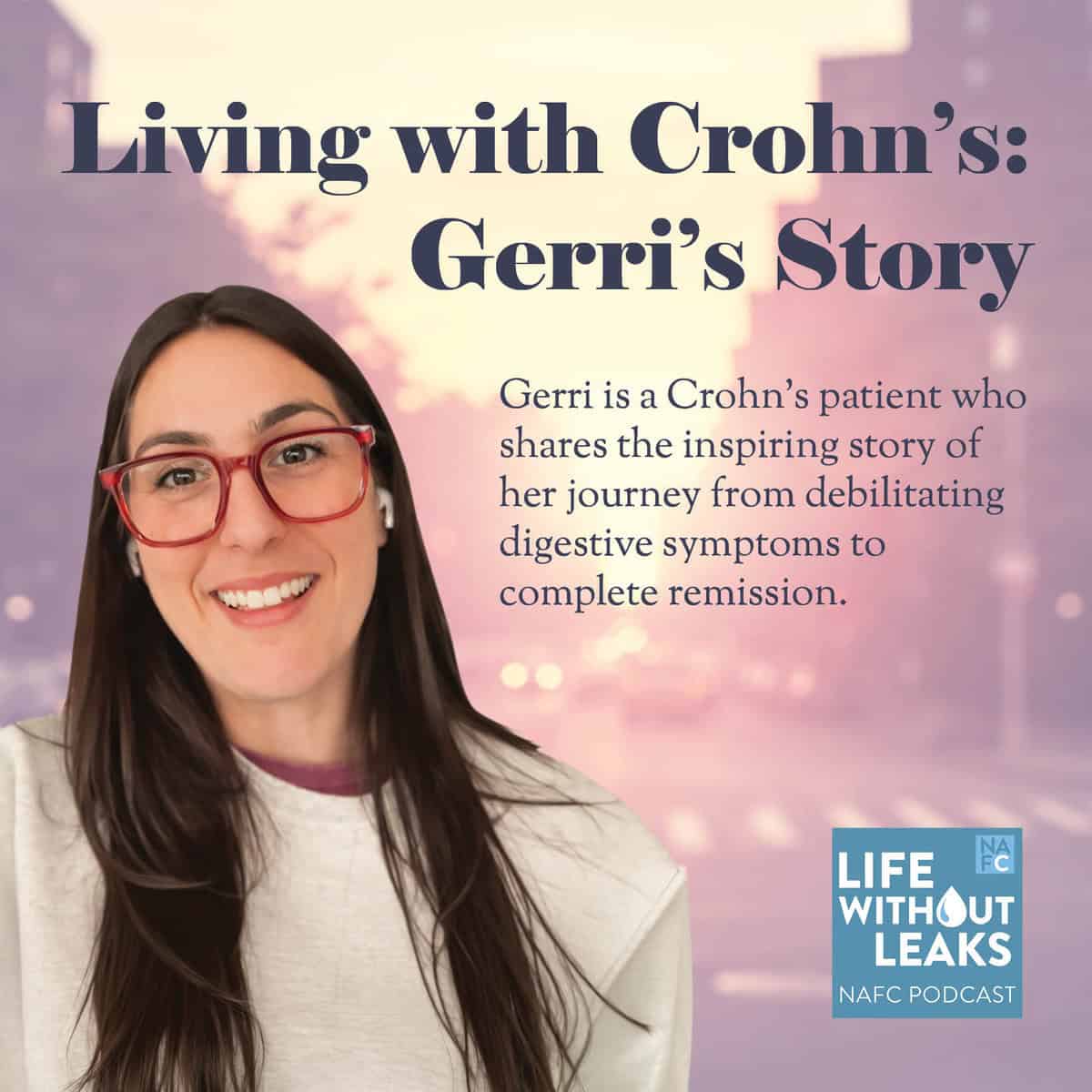
In this moving patient story, we speak with Gerri, a Crohn’s patient, about her journey from debilitating digestive symptoms to complete remission.

Gerri shares what it was like to live in New York City while navigating relentless urgency, severe abdominal pain she describes as “hot lava,” and the constant need to locate the nearest restroom. After months of worsening symptoms and a turning point moment with her mom, she sought specialist care, leading to bloodwork, testing, colonoscopy and, ultimately, a diagnosis.

A man in a suit is shown next to text promoting a podcast episode called Straight Talk About IBD. The episode covers IBD symptoms, diagnosis, and treatment. The Life Without Leaks NAFC Podcast logo appears in the corner.

Understanding IBD: From Diagnosis to Remission… What You Need to Know – Copy

In this episode of Life Without Leaks, we’re joined by Dr. Ryan O’Leary, advanced fellow in inflammatory bowel disease, for a deep dive into inflammatory bowel disease (IBD).

Dr. O’Leary breaks down what sets Crohn’s disease and ulcerative colitis apart from other digestive conditions, explaining how IBD can affect patients at any age, from early childhood to later adulthood, and why diagnosis can sometimes be delayed. He explores the complexity of inflammation, the role of the immune system and how IBD can impact far more than the gut, including joints, skin, eyes and mental health.

The conversation also covers realistic treatment goals, the expanding range of medications available today, dietary considerations, when surgery becomes part of care and why personalized treatment plans are essential. Importantly, Dr. O’Leary addresses the emotional toll of living with a chronic condition and emphasizes the importance of persistence, advocacy and specialist care.

If you or a loved one is navigating unexplained GI symptoms or an IBD diagnosis, this episode offers clarity, reassurance and a hopeful look at what’s possible with modern care.

Learn more about a wide range of bowel conditions and get free resources here.

A magnifying glass highlights a wooden figure among others, next to the text Bladder leaks affect more than your bladder on a blue background.
Your voice Matters

Take this brief survey to tell us how incontinence impacts your life. Your answers will help shape the future of incontinence care.