Search
[give_form id="19690"]

Patient Perspective: Ellen’s Story

After the birth of my 2nd child, I began experiencing urinary incontinence.  I started leaking a bit here and there, and it only got worse as I got older. I assumed it was just a part of aging and that there was nothing I could do. And while the episodes were embarrassing, I was able to control and hide them pretty well by wearing protection and always keeping a close eye on the toilet. 

However, when my youngest was 15 years old, I had my first real bowel accident, and life as I knew it officially changed.  I began having more and more episodes, and eventually didn’t even want to leave the house because I was so terrified of having an accident.  I stopped seeing friends. I ordered groceries and most things I needed online.  I refused to go on dates with my husband.  There is something that feels just a little bit worse about having a bowel accident vs. having a bladder accident – it’s messier, smellier, much more apparent, and just so humiliating that you never want others to know it is something you are going through.

I lived like this for six years before finally realizing that I wasn’t controlling my ABL, it was controlling me.  I got up the nerve to speak with my doctor and was able to have a surgery that helped alleviate many of my issues.

All of this could not have come soon enough – my first granddaughter was born a year ago and to think that I may have missed out on that moment or all the wonderful ones that have followed makes me cringe. My only regret is that I didn’t do something about it sooner.

Ellen T., Atlanta, GA

Comments

One Response

  1. Twelve years ago and due to repeated attacks of diverticulitis (6 severe attacks within 8 months) my gastroenterologist suggested surgery to remove the diseased section of my colon. 10 or 12 inches of my colon were removed and a 1 cm cancer was found in one of the pockets. Six months of intensive chemotherapy followed. Since the surgery I have had to deal with erratic bowel movements, having to be close to a bathroom when I have eaten first thing in the morning.The rush to the bathroom seems like a trigger reaction when eating the first meal in the morning.Since then I have repeated bouts of uncontrollable bowel movements and at age 88 I am becoming more and more concerned about a time when I will be unable to deal with potential "accidents", repeatedly soiling myself. I believe the sphincter is no longer responding properly and the loss of some 12 inches of colon as well as the surgery might be the cause of my problem. Any suggestion and advice would be extremely welcome.Hanna

Leave a Reply

Your email address will not be published. Required fields are marked *

This site uses Akismet to reduce spam. Learn how your comment data is processed.

Related Articles

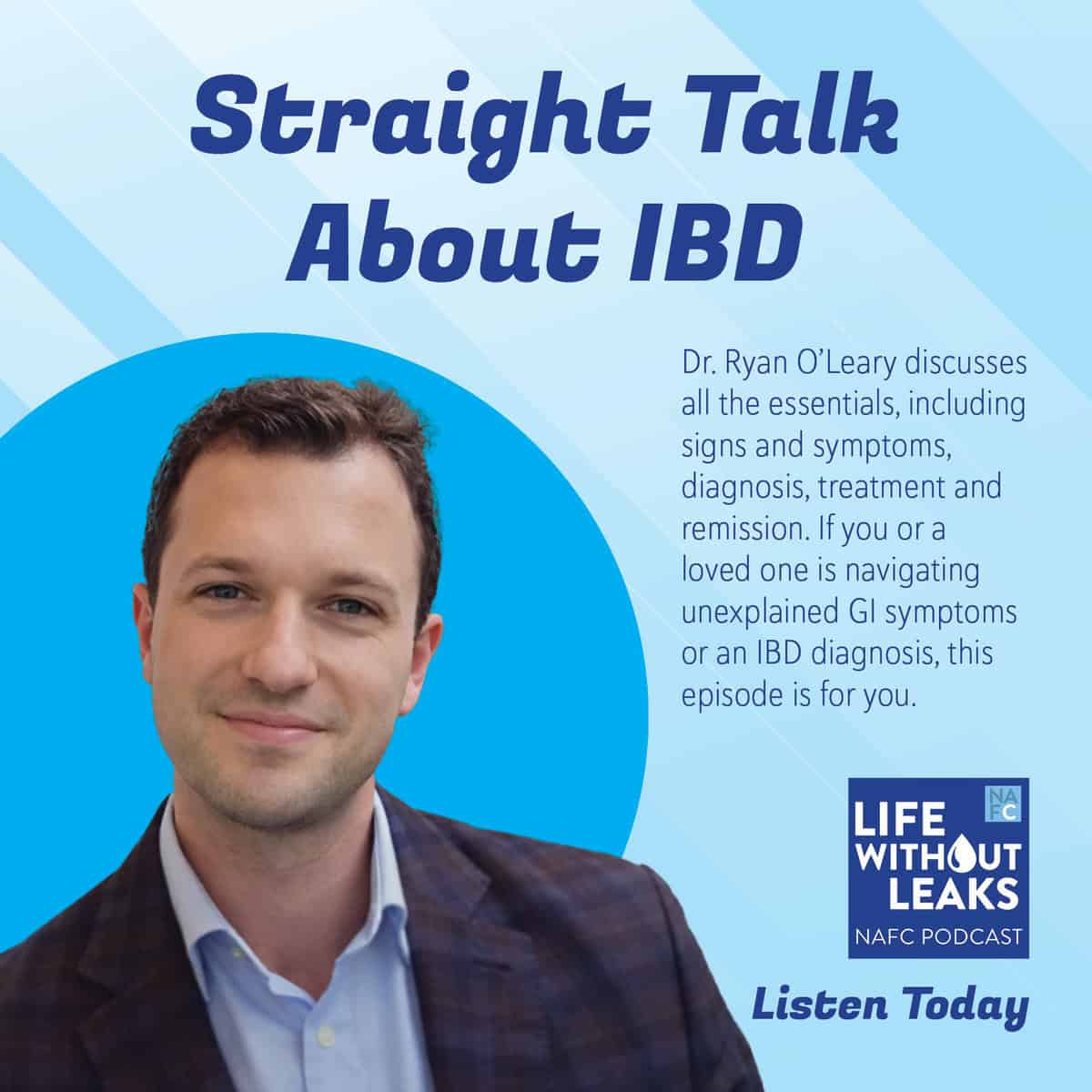
A man in a suit is shown next to text promoting a podcast episode called Straight Talk About IBD. The episode covers IBD symptoms, diagnosis, and treatment. The Life Without Leaks NAFC Podcast logo appears in the corner.

Understanding IBD: From Diagnosis to Remission… What You Need to Know – Copy

In this episode of Life Without Leaks, we’re joined by Dr. Ryan O’Leary, advanced fellow in inflammatory bowel disease, for a deep dive into inflammatory bowel disease (IBD).

Dr. O’Leary breaks down what sets Crohn’s disease and ulcerative colitis apart from other digestive conditions, explaining how IBD can affect patients at any age, from early childhood to later adulthood, and why diagnosis can sometimes be delayed. He explores the complexity of inflammation, the role of the immune system and how IBD can impact far more than the gut, including joints, skin, eyes and mental health.

The conversation also covers realistic treatment goals, the expanding range of medications available today, dietary considerations, when surgery becomes part of care and why personalized treatment plans are essential. Importantly, Dr. O’Leary addresses the emotional toll of living with a chronic condition and emphasizes the importance of persistence, advocacy and specialist care.

If you or a loved one is navigating unexplained GI symptoms or an IBD diagnosis, this episode offers clarity, reassurance and a hopeful look at what’s possible with modern care.

Learn more about a wide range of bowel conditions and get free resources here.

IBD Patient Story - Gerri.

From Pain ‘Like Lava’ to Remission: Living Fully with Crohn’s Disease

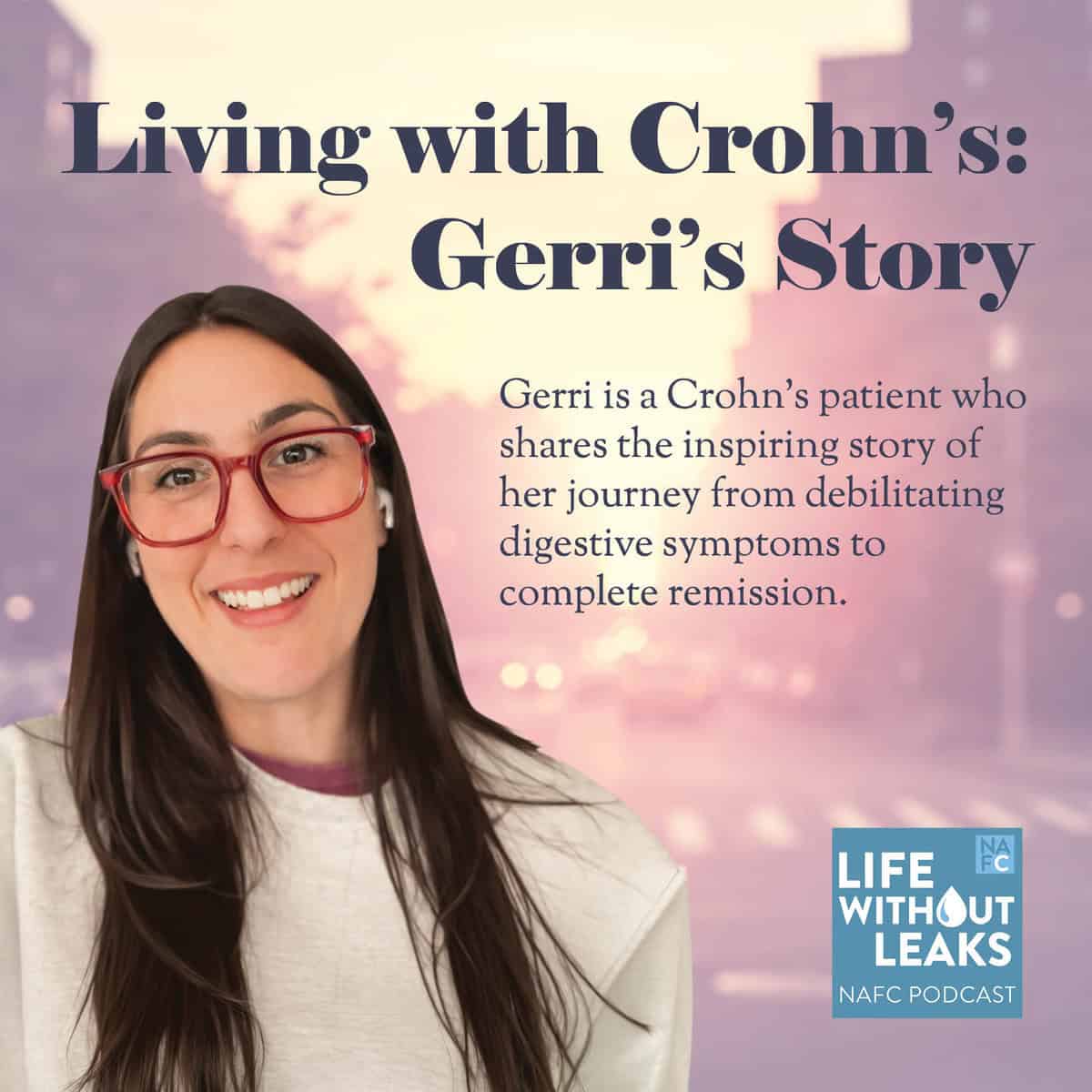
In this moving patient story, we speak with Gerri, a Crohn’s patient, about her journey from debilitating digestive symptoms to complete remission.

Gerri shares what it was like to live in New York City while navigating relentless urgency, severe abdominal pain she describes as “hot lava,” and the constant need to locate the nearest restroom. After months of worsening symptoms and a turning point moment with her mom, she sought specialist care, leading to bloodwork, testing, colonoscopy and, ultimately, a diagnosis.

A man in a suit is shown next to text promoting a podcast episode called Straight Talk About IBD. The episode covers IBD symptoms, diagnosis, and treatment. The Life Without Leaks NAFC Podcast logo appears in the corner.

Understanding IBD: From Diagnosis to Remission… What You Need to Know – Copy

In this episode of Life Without Leaks, we’re joined by Dr. Ryan O’Leary, advanced fellow in inflammatory bowel disease, for a deep dive into inflammatory bowel disease (IBD).

Dr. O’Leary breaks down what sets Crohn’s disease and ulcerative colitis apart from other digestive conditions, explaining how IBD can affect patients at any age, from early childhood to later adulthood, and why diagnosis can sometimes be delayed. He explores the complexity of inflammation, the role of the immune system and how IBD can impact far more than the gut, including joints, skin, eyes and mental health.

The conversation also covers realistic treatment goals, the expanding range of medications available today, dietary considerations, when surgery becomes part of care and why personalized treatment plans are essential. Importantly, Dr. O’Leary addresses the emotional toll of living with a chronic condition and emphasizes the importance of persistence, advocacy and specialist care.

If you or a loved one is navigating unexplained GI symptoms or an IBD diagnosis, this episode offers clarity, reassurance and a hopeful look at what’s possible with modern care.

Learn more about a wide range of bowel conditions and get free resources here.

A magnifying glass highlights a wooden figure among others, next to the text Bladder leaks affect more than your bladder on a blue background.
Your voice Matters

Take this brief survey to tell us how incontinence impacts your life. Your answers will help shape the future of incontinence care.