Search
[give_form id="19690"]

TREATING URINARY INCONTINENCE IN WOMEN WITHOUT SURGERY

A new systematic review of the nonsurgical treatments for urinary incontinence has recently been completed by PCORI (Patient-Centered Outcomes Research Institute), an organization that funds research that can help patients and those who care for them make better-informed decisions about the healthcare choices they face every day.  PICORI’s research is guided by patients, caregivers, and the broader healthcare community and helps to improve outcomes of treatment decisions.

The review looked at studies that included women facing the most common types of urinary incontinence: stress, urgency and mixed, and included relevant studies and solicited input from several clinician and research experts in female UI in order to address 4 key questions:

  • Key Question 1:  What are the benefits and harms of nonpharmacological treatments of UI in women, and how do they compare with each other?

  • Key Question 2: What are the benefits and harms of pharmacological treatemtns of UI in women, and how do they compare with each other?

  • Key Question 3: What are the comparative benefits and harms of nonpharmacological versus pharmacological treatments of UI in women?

  • Key Question 4: What are the benefits and harms of combined nonpharmacological and pharmacological treatment of UI in women?

The research team looked at 233 studies on nonsurgical treatments of UI, which included a total of about 14,000 women.

Learn more about the evidence update from PCORI, the findings from their review, and access to the full report at the link below.


Comments

2 Responses

  1. Have you tried looking at diaper banks? They can help in a pinch. Additionally, if you qualify for Medicare, you may be able to get your product approved by insurance. Finally, big box stores can offer some savings by buying in bulk.

  2. After 2 years of different medications for urge incontinence, I’m seeing no change. I use about 28 night time absorbent adult diapers a week. My only income is from Social Security. And, isn’t very much. Medicare doesn’t pay or cover the coat of adult diapers. I’d like to find a source that helps with the cost. Or, a source that sells at a discount.

Leave a Reply

Your email address will not be published. Required fields are marked *

This site uses Akismet to reduce spam. Learn how your comment data is processed.

Related Articles

An older man in plaid pajamas stands barefoot by his bed at night, looking tired. The room is dimly lit, with an unmade bed, a nightstand with a lamp, and a digital clock showing 3:17 AM—challenges like incontinence and skin protection on his mind.

Ask The Expert: Why Do I Experience More Incontinence at Night Than During the Day?

Q: My elderly parent(s) experience incontinence, and for the first time, I am being asked to help with their clothing and absorbent product changes. I feel like I’m in over my head. Do you have any tips or suggestions?

A: When it comes to helping your aging loved ones with managing incontinence changes and cleanups, the conversations around these intimate activities can be awkward for both sides. It can even change the dynamics of your relationship. Here are a few tips to make it easier on you and on them.

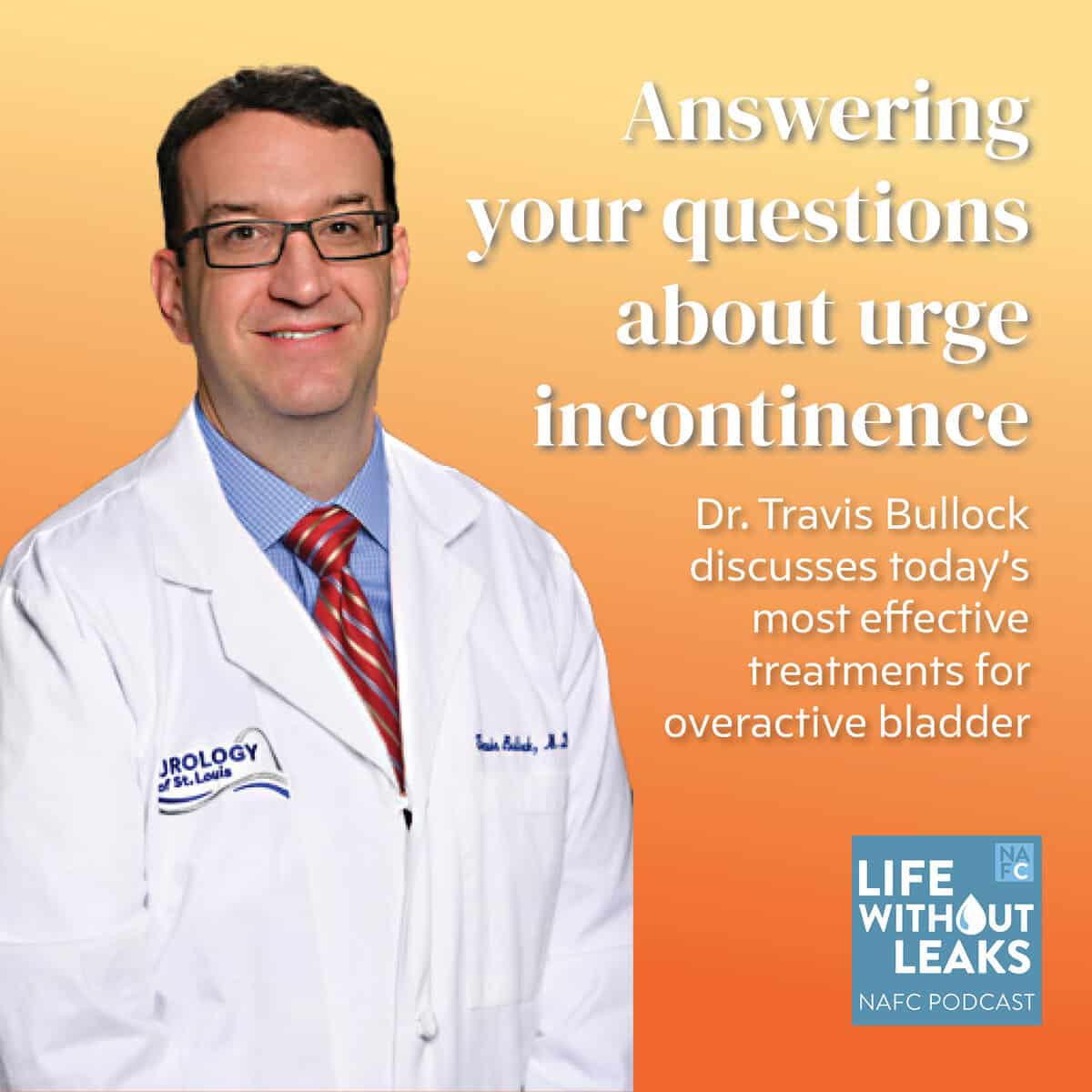
A smiling male doctor in a white lab coat stands against an orange background. Text reads: Answering your questions about incontinence after prostate cancer surgery. Dr. Travis Bullock discusses today’s most effective treatments for overactive bladder.

Answers to your questions about urge incontinence and neuromodulation

Urgency, frequent bathroom trips and unexpected leaks can disrupt daily life, but they’re more treatable than many people realize. Dr. Travis Bullock joins Life Without Leaks to answer questions from his recent webinar, explain the difference between overactive bladder and other forms of incontinence, and discuss new therapies like neuromodulation that can help restore bladder control and quality of life.

For more information about the National Association for Continence, click here, and be sure to follow us on Facebook, Instagram and Pinterest.

An older woman with short gray hair sleeps peacefully in bed, wearing a pink satin pajama top and hugging a soft gray blanket. A glass of water, medicine bottles, and items to help manage incontinence cost sit on the nightstand beside her.

Managing Overnight Incontinence for a Better Night’s Sleep

A good night’s sleep plays an important role in maintaining overall health, comfort, and emotional well-being. For individuals managing incontinence, nighttime can sometimes feel uncertain. Overnight leaks may interrupt sleep, create concern about bedding or clothing, and make mornings feel more stressful than restful. These experiences are common, and they are something many adults navigate at different stages of life.

An older man in plaid pajamas stands barefoot by his bed at night, looking tired. The room is dimly lit, with an unmade bed, a nightstand with a lamp, and a digital clock showing 3:17 AM—challenges like incontinence and skin protection on his mind.

Ask The Expert: Why Do I Experience More Incontinence at Night Than During the Day?

Q: My elderly parent(s) experience incontinence, and for the first time, I am being asked to help with their clothing and absorbent product changes. I feel like I’m in over my head. Do you have any tips or suggestions?

A: When it comes to helping your aging loved ones with managing incontinence changes and cleanups, the conversations around these intimate activities can be awkward for both sides. It can even change the dynamics of your relationship. Here are a few tips to make it easier on you and on them.

A magnifying glass highlights a wooden figure among others, next to the text Bladder leaks affect more than your bladder on a blue background.
Your voice Matters

Take this brief survey to tell us how incontinence impacts your life. Your answers will help shape the future of incontinence care.