


Pelvic Floor Relaxation Exercises
DIAPHRAGMATIC BREATHING FOR PELVIC FLOOR RELAXATION
The diaphragm works in synergy with the pelvic floor and helps to promote muscle relaxation. This is important for decreasing pain and promoting optimal muscle function.
- Place one hand on your chest and another hand on your belly, just below your rib cage.
- Take a deep breath in to the count of three, and then exhale to the count of four.
- When you inhale, your pelvic floor relaxes, and as you exhale, your pelvic floor returns to its resting state.
- Practice this breathing for 5-10 minutes each day.
Note: You’ll know that you are using your diaphragm correctly if you feel the hand on your belly rise and fall.
NEED SOME EXTRA GUIDANCE? SIGN UP FOR OUR FREE 6-WEEK GUIDE TO BETTER PELVIC FLOOR HEALTH!
PELVIC GIRDLE STRETCHES FOR PELVIC FLOOR RELAXATION
All of the following positions are great for practicing diaphragmatic breathing!
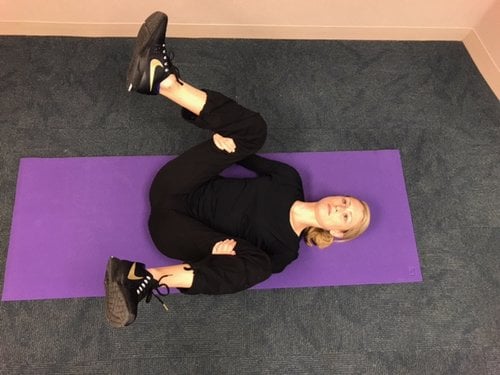
HAPPY BABY POSE:
- Lie on your back.
- Open your knees wider than your chest and bring them up towards your armpits. You may hold your legs with your arms behind your knees or at your ankles, but try to keep your ankles over your knees.
- You can either hold this position or gently rock on your back from side to side
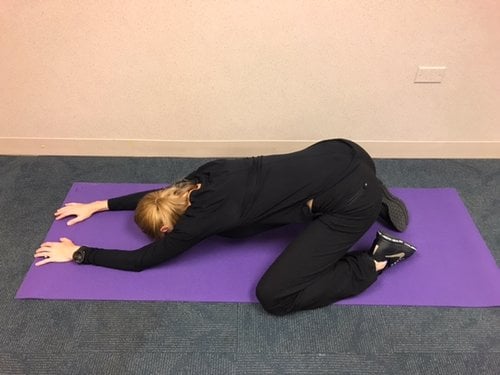
CHILD’S POSE:
- Start on your hands and knees.
- Spread your knees wide apart while keeping your big toes touching.
- Gently bow forward, moving your torso downwards, between your thighs. Keep your arms stretched out long and in front of you.
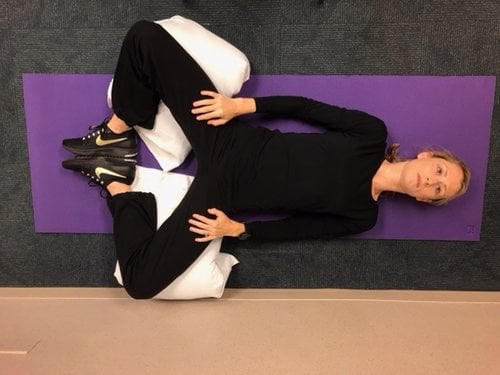
ADDUCTOR STRETCHING:
- Lie on your back with the soles of your feet together and knees out to the sides.
- This should be a relaxing position. If you feel a pulling along your inner thighs or in your pubic bones, place pillows under your knees for support.
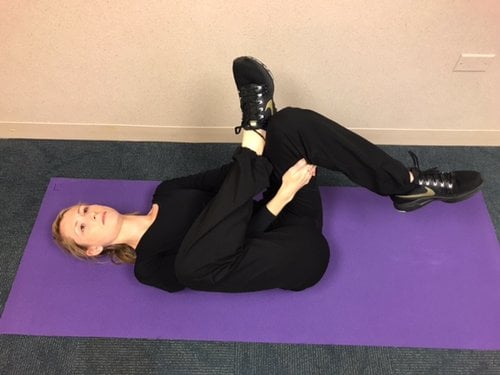
PIRIFORMIS STRETCHING:
- Lie on your back with your knees bent.
- Place your left ankle on your right knee, like a figure four.
- Pull your right thigh toward your chest to feel a stretch on the outside of your left hip.
- Hold for 30 seconds, and then repeat on the other side.
Sign Up For Our FREE 6-Week Guide To Better Pelvic Floor Health!
Our six-week guided program provides men and women with actionable steps to help strengthen and relax their pelvic floor. Receive weekly tips, progressive exercise suggestions, and more with this helpful guide! Click the button below to sign up!







15 Responses
I have urine retention and bowel issues too. Constipation and diarrhea.
Hi Kathleen – thanks for reaching out! You can sign up for the guide at https://mailchi.mp/nafc.org/6-week-pelvic-floor-guided-program.
Please send me the 6-week guide. I found success doing kegels before I passed out and suffered a double brain bleed that kept me from being able to walk for a time. I had two brain surgeries. It’s been nearly 2 years, and I’m still trying to get back to my normal routines.
I am a male.Can I apply these exercises?
sufro de vegija hipoactiva, retengo orina como medio litros que me pueden recomendar grs maria esther
Looking forward to learning more!
I don’t see how to sign up for the program at the link you provided. Do you have another one?
Is it normal to have an tense Pelvic floor muscle throughout the day. At work, just doing Daily stuff like making dinner, cleaning the house and stuff. As you do this you often tighten the core (and use many more muscles Ofc), and so you probably unconsciously tighten the pelvic floor muscles too ? I just started noticeing, and i dont know if its a problem i have or that i just can’t stop thinking about it so therefor i can’t relax the mucles…
I have a very weak pelvic floor. ( 1 out of 5). How can I strengthen without kegels. I have problems doing them.
Hi, I’ve been having OAB problems for years. Only those who suffer from it know what a difficult condition it is to live with. I would love to try your 6-week program please.
Have OAB and difficulty emptying bladder. Reading from your site I expect that I have tightness in pelvic floor. Can this also affect buildup in feet and ankles? I’ve been on Testosterone injections for 10+ years as my pituitary gland doesn’t function. HELP? I’ve been doing Kegels which I gather is a negative. Have recent lower back pain as well.
Hi I need to relax my pelvic floor muscles can u help plz
Hi I would appreciate a 6 wk guide.
Hi! You can sign up for the six week guide here: https://nafc.org/6-week-pelvic-health-program/
Thanks!
NAFC
Please send me the 6 week guide