

Anyone who struggles with a leaky bladder knows that incontinence supplies can add up. Women spend an average of $750 annually managing urinary incontinence. And because urinary incontinence doesn’t resolve without treatment and actually worsens with age, costs only increase as time goes on. However, many people don’t realize that insurance covers certain incontinence-related items, as well as some treatments that actually stop bladder leaks.
HOW MUCH DOES INCONTINENCE COST?
Although purchasing urinary pads may not seem like a substantial individual cost, urinary incontinence costs US men and women more than $20 billion per year. Most of that cost is spent on incontinence supplies and management, including pads and laundry.
There’s also a cost involving quality of life. Studies show that people with urinary incontinence may have a lower quality of life because they avoid leaving home and experience anxiety related to incontinence in social settings. Habitual isolation can lead to depression in people who cannot manage or treat their bladder leakage effectively.
HOW CAN I PAY FOR INCONTINENCE SUPPLIES?
People who suffer from urinary incontinence may not realize that there are ways other than their own wallets to cover some costs related to managing incontinence symptoms.
Insurance. Private insurance coverage varies by plan and company. Check with your insurance provider to determine what is covered. Many companies offer reimbursements for adult diapers, absorbent pads, and/or gloves, and most will have a limit to the number of supplies and possibly the brand of supplies.
Medicare and Medicaid. Medicare does not cover incontinence pads or adult diapers, but if you qualify for Medicaid, absorbent pads and adult diapers may be covered. Medicaid plans vary by state, so check your specific state for coverage rules.
HSAs and FSAs. Two other options for help with incontinence costs are health savings accounts (HSAs) and flexible spending accounts (FSAs). These accounts allow you to pay for medical costs, including incontinence supplies, with funds that aren’t subject to taxes. You can also use these types of accounts to purchase FDA-cleared Kegel stimulators, such as ELITONE.
WILL INSURANCE COVER INCONTINENCE TREATMENTS?
Although most people are too embarrassed to speak with a clinician and will try to manage bladder leaks on their own, urinary incontinence only worsens with age. The underlying problem in stress urinary incontinence is a weakened pelvic floor. The first line of treatment with urinary incontinence is Kegel exercises, which aim to strengthen pelvic floor muscles to help control urine flow. But these exercises are difficult to perform sustainably.
Other treatments for urinary incontinence include laser therapy, pelvic floor physical therapy, and Botox, as well as magnetic stimulation and implants. These treatments can require multiple office visits and continual fees. Lasers, magnetic chairs, and other treatments that are more investigational are NOT covered by insurance. However, Botox injections may be partially covered by Medicare for urge incontinence. For severe cases, insurance may cover the cost of surgery after other conservative treatments have been exhausted.
The high cost of some of these treatments makes investing in a device to help with Kegels more attractive. Kegel exercise devices either stimulate pelvic floor muscles or simply give feedback. Kegel trainers with vaginal biofeedback probes are not FDA-cleared for urinary incontinence and therefore are not covered by insurance. Stimulation devices are FDA-cleared for incontinence and proven to decrease bladder leaks from stress urinary incontinence, but only some are covered by insurance. ELITONE is the only nonvaginal stimulation device covered by insurance.
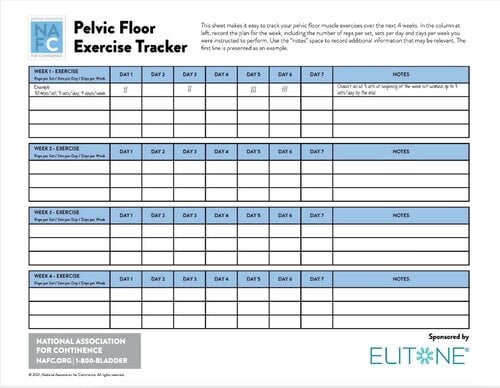
ELITONE is available for purchase without a prescription, however, private insurance groups may cover it with a prescription from your treating physician. Ask your insurance provider whether they cover “non-implanted pelvic floor electrical stimulators” HCPCS/DME code E0740. Medicare coverage includes renting the device for a time with some out-of-pocket expense, again with a physician’s prescription. (Note: Some insurance companies require patients to have tried Kegels on their own first, prior to covering the cost for a device. Click here to download NAFC’s pelvic floor exercise tracker, which can help you document your efforts.)
The cost to treat and potentially eliminate bladder incontinence is far less than the annual costs of just managing symptoms over the years. Many of these treatments offer monthly payments that are as low as what you might spend on pads but without the never-ending annual costs! Take the first step to living a leak-free life.
ABOUT ELITONE: ELITONE® tones weakened pelvic floor muscles for the 1 in 3 women with bladder leaks. The externally-placed GelPad is discreet, comfortable, and worn under clothing for 20 minutes, making treatment EASY. She receives Kegel contractions, longer and stronger than she could herself, without the work. ELITONE® is FDA-cleared and clinically proven to reduce incontinence. The device is sold directly to consumers without a prescription on https://elitone.com, and CVS.com.
About The Author: Lee Elkins is loving life as a freelance writer and mom of four based in Connecticut.






One Response
This post was incredibly helpful! Navigating the financial aspects of incontinence products can be overwhelming, so your tips on utilizing insurance and HSAs are invaluable. I appreciate the practical advice and will definitely explore these options for better management of costs. Thank you for sharing!