Urinary Incontinence: Causes And Treatment
JOIN OUR NEWSLETTER
Receive custom tools to help you manage your condition and get the latest in bladder and bowel health from NAFC!
Urinary Incontinence Overview
Urinary incontinence is defined as the involuntary loss of urine. Over 33 million Americans suffer from some type of urinary incontinence or bladder condition, a problem that often causes embarrassment for many. And while it is a very common problem, it should not be considered a “normal” one.
Many people do not realize that there are many different types of urinary incontinence or reasons that may cause you to leak urine. Some of the more common conditions are overactive bladder (OAB), urinary retention, mixed incontinence, and stress urinary incontinence. Watch the short video below, then read more about the different types of bladder leakage issues and click through to learn about symptoms, causes and treatment options.
Overactive Bladder & Urge Incontinence
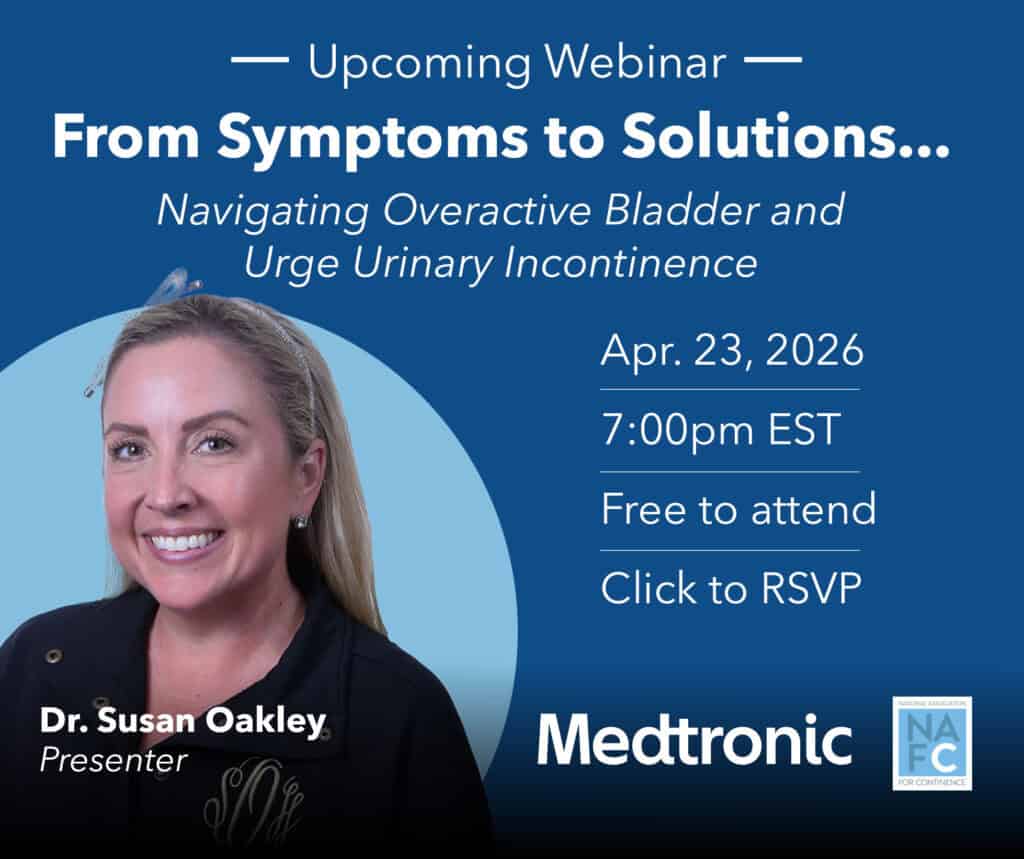
When you feel the need to go and go right NOW, you may be dealing with an Overactive Bladder. If you cannot control the urge and bladder leakage occurs, that is what makes it urge incontinence. The good news is, in many cases this is a treatable condition and not merely something you have to deal with because of age.
Urinary Retention
In mild cases, urinary retention makes it difficult to start urination and the flow is weak. Once finished you often feel the need to go again because the bladder isn’t fully emptied. In more acute cases, the lower belly becomes distended causing great discomfort and pain. Despite the urge to go, urination is not possible.
Mixed Incontinence
As the name suggests, Mixed Incontinence is a combination of stress incontinence, including muscle and sphincter related issues, and urgency incontinence like those mentioned above. Usually one symptom is more severe than the other and that directly affects what methods will be most effective in treatment.
Stress Urinary Incontinence
A problem that affects both men and women, Stress urinary incontinence (SUI) occurs because of weak pelvic floor muscles and/or a deficient urethral sphincter. This weakness can cause the bladder to leak during exercise, coughing, sneezing, laughing, or any body movement that puts pressure on the bladder. Stress urinary incontinence often shows up after childbirth and menopause in women while prostate cancer treatment, such as radical prostatectomy, can trigger it in men.
Importantly, stress urinary incontinence can affect men and women differently. To learn more, visit these links:
RELATED ARTICLES

The Financial Impact of Incontinence: Costs You May Not See
Incontinence is often discussed in terms of symptoms and quality of life but for many people, it also brings a steady (and sometimes surprising) financial burden. Beyond the obvious cost of pads, protective underwear, and skin-care products, there can be added expenses from laundry, missed work, caregiving needs, and medical visits. The good news: understanding where the costs come from is the first step toward reducing them—and getting the right treatment can be a cost-saver, not just a health improvement.

Speaking Up About Incontinence
For many people living with bladder leaks, the hardest part isn’t the symptoms themselves.
It’s deciding to talk about them.
Bladder leaks can feel too small to mention, too embarrassing to explain, or not “serious enough” to justify a doctor’s visit. Many people quietly manage symptoms for years—adjusting their routines, limiting activities, and hoping things don’t get worse.
If this sounds familiar, you’re not alone. And you’re not wrong for feeling this way.

Incontinence by the Numbers
How common it is, why it’s increasing, and what an aging population means for patients and families
Incontinence is often treated as something people should keep private — but the reality is that it’s extremely common, and it affects millions of Americans every day.
As our population ages, especially with Baby Boomers entering older adulthood, more people are living with bladder and bowel control problems. That means more patients seeking answers, more caregivers providing support, and greater impact on families and the healthcare system.
Understanding the numbers helps reduce stigma — and reminds people that they are not alone and help is available.

The Financial Impact of Incontinence: Costs You May Not See
Incontinence is often discussed in terms of symptoms and quality of life but for many people, it also brings a steady (and sometimes surprising) financial burden. Beyond the obvious cost of pads, protective underwear, and skin-care products, there can be added expenses from laundry, missed work, caregiving needs, and medical visits. The good news: understanding where the costs come from is the first step toward reducing them—and getting the right treatment can be a cost-saver, not just a health improvement.